- A Unit of Marudhar Hospital and Research Pvt. Ltd. (MHRPL)
- swarnacosmetic@gmail.com
- Vaishali Nagar, Jaipur, Rajasthan 302021
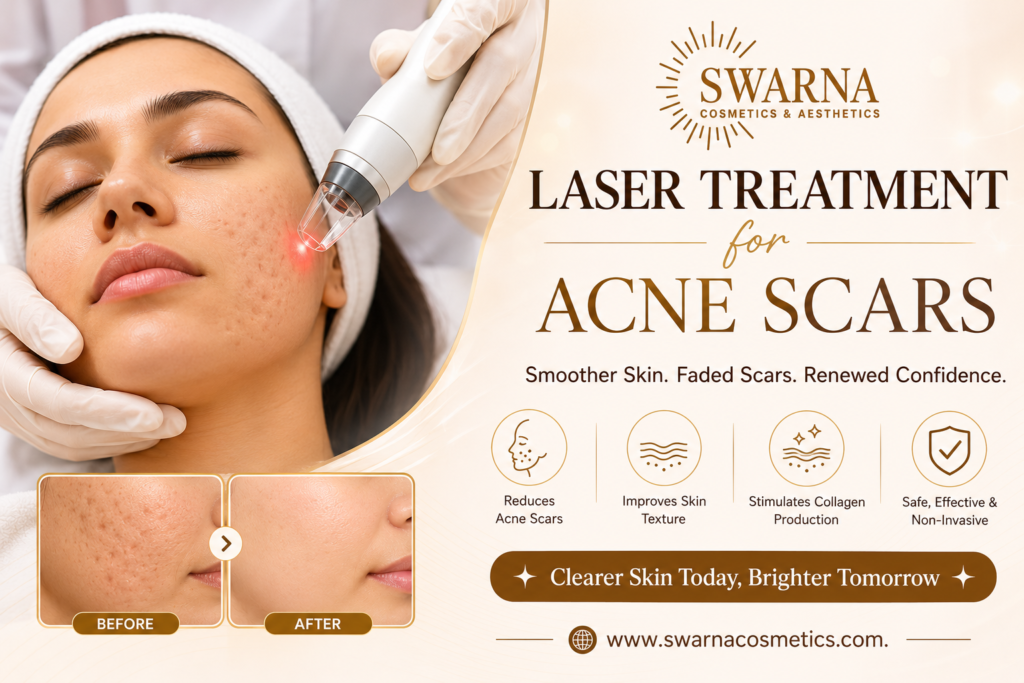
Acne may disappear, but the scars it leaves behind can remain visible for years. For many people, acne scars are more frustrating than the acne itself. Uneven skin texture, dark marks, and post-acne pigmentation often affect confidence and make the skin appear older than it actually is Fortunately, modern dermatology offers effective solutions. One of the most advanced options available today is Laser Treatment for Acne Scars, which can improve skin texture, stimulate collagen production, and reduce pigmentation with minimal downtime.
At Swarna Cosmetics, patients frequently seek treatment for acne scars, hyperpigmentation, uneven skin tone, and dark spots. Understanding how laser technology works can help you make informed decisions about your skin health and choose the most appropriate treatment plan.
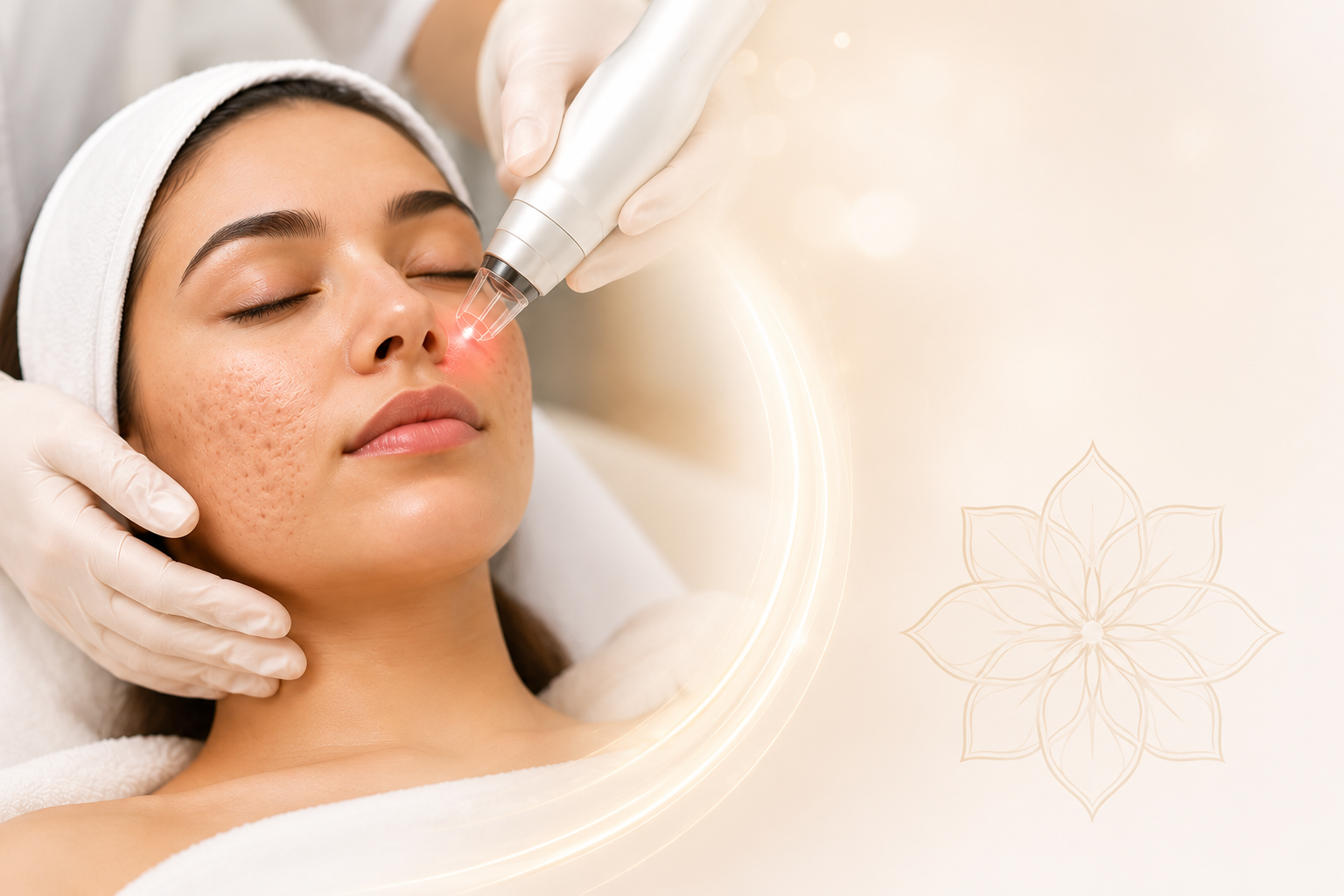
Acne scars form when inflammation damages deeper layers of the skin. During healing, the body attempts to repair the damaged tissue by producing collagen. When too little collagen is produced, depressed or atrophic scars may develop. When too much collagen is produced, raised scars can occur. Hyperpigmentation often develops after acne inflammation has healed. This condition, known as post-inflammatory hyperpigmentation, occurs when excess melanin accumulates in specific areas of the skin.
Several factors contribute to acne scars and pigmentation:
Understanding the root cause helps dermatologists select the most effective treatment strategy.
Unlike topical creams that work primarily on the skin’s surface, Laser Treatment for Acne Scars targets deeper skin layers where scar tissue exists.The laser creates controlled microscopic zones of thermal energy within the skin. This process activates fibroblasts, which are specialized cells responsible for producing collagen and elastin.
As new collagen develops over the following weeks and months:
This biological remodeling process continues long after the treatment session is completed. A common misconception is that laser treatment simply removes the top layer of skin. In reality, the most important benefit comes from collagen remodeling beneath the surface.
Erbium Laser for Pigmentation is highly precise and targets superficial skin damage while preserving surrounding healthy tissue.
Because of its controlled penetration depth, it is commonly used for:
The laser removes damaged skin cells containing excess pigment while stimulating skin renewal. Patients often experience a brighter complexion as fresh skin cells replace damaged tissue.
Pigmentation occurs because melanin becomes concentrated in specific areas of the skin. During Pigmentation Laser Treatment, laser energy selectively targets melanin deposits without significantly affecting surrounding skin structures.
The pigment particles absorb laser energy and fragment into smaller particles.The body’s natural immune system gradually clears these fragments through normal cellular processes.This mechanism explains why pigmentation typically fades gradually over several weeks rather than disappearing immediately.
Dark spots can develop due to:
Laser Treatment for Dark Spots works by targeting localized pigment clusters.
The treatment can significantly improve:
Most patients notice progressive improvement after multiple sessions rather than after a single treatment. Realistic expectations are important for treatment satisfaction.
Many people focus only on removing visible pigmentation. However, successful Skin Pigmentation Removal Treatment involves addressing deeper skin health as well.
An effective treatment plan may include:
Combining these approaches often delivers better and longer-lasting results than relying on a single treatment alone.
Not all patients seek treatment for scars or pigmentation alone.
Many choose Laser Skin Brightening Treatment to improve:
Laser energy stimulates skin renewal and collagen production simultaneously.
The result is skin that often appears healthier, brighter, and more refreshed.
Feature | Laser Treatment | Chemical Peels |
Depth of Treatment | Adjustable and precise | Surface to medium depth |
Acne Scar Improvement | Excellent | Mild to moderate |
Pigmentation Reduction | Highly effective | Moderate |
Collagen Stimulation | Significant | Limited |
Downtime | Moderate | Mild to moderate |
Results | Long-lasting | Often requires repeated sessions |
Customization | Highly customizable | Less precise |
Both treatments have their place in dermatology. The ideal choice depends on skin type, scar severity, pigmentation depth, and treatment goals.
Laser procedures may benefit individuals who have:
A detailed dermatologist consultation is essential before treatment.
Skin type, medical history, and expectations should always be evaluated carefully.
Laser treatment may not be appropriate for everyone.
You may need to postpone treatment if you:
This is why professional assessment is critical before beginning treatment.
One of the most common questions involves the number of sessions needed.
The answer depends on:
Most patients require approximately 3–6 sessions for noticeable improvement.
More severe acne scars may require additional treatments It is important to understand that laser therapy improves scars significantly, but no treatment can guarantee complete scar removal.
Before treatment:
During the procedure:
Most sessions last between 20 and 60 minutes depending on the treatment area.
Consistent post-treatment care greatly influences final results.
When performed by trained professionals, laser treatments are generally safe.
Temporary side effects may include:
Serious complications are uncommon when proper protocols are followed Choosing an experienced clinic significantly reduces treatment risks.
At Swarna Cosmetics, every treatment plan is personalized according to the patient’s skin concerns, scar severity, pigmentation pattern, and treatment goals. The clinic focuses on evidence-based dermatology, advanced laser technology, and individualized patient care.
Whether you are seeking Laser Treatment for Acne Scars, Erbium Laser for Pigmentation, Pigmentation Laser Treatment, Laser Treatment for Dark Spots, Skin Pigmentation Removal Treatment, or Laser Skin Brightening Treatment, the objective remains the same: healthier skin with natural-looking improvement.Follow us on Instagram for latest beauty updates, offers & skincare tips.
Laser Treatment for Acne Scars can provide long-lasting improvement by stimulating new collagen production and remodeling damaged skin tissue. While the scars that improve generally do not return, maintaining healthy skin and preventing future acne breakouts is important to avoid new scarring.
The number of sessions depends on the severity of the scars, skin type, and treatment goals. Most patients require between 3 and 6 sessions, while deeper scars may need additional treatments for optimal results.
Erbium Laser for Pigmentation can be used on many skin types when performed by an experienced dermatologist. A proper skin assessment is necessary to determine the safest and most effective treatment plan.
Pigmentation Laser Treatment can significantly reduce pigmentation, dark spots, and uneven skin tone. However, results vary depending on the cause and depth of pigmentation. Multiple sessions may be required for the best outcome.
Downtime depends on the type of laser used and the treatment intensity. Most patients experience mild redness and sensitivity for a few days. Following post-treatment care instructions helps speed up recovery.